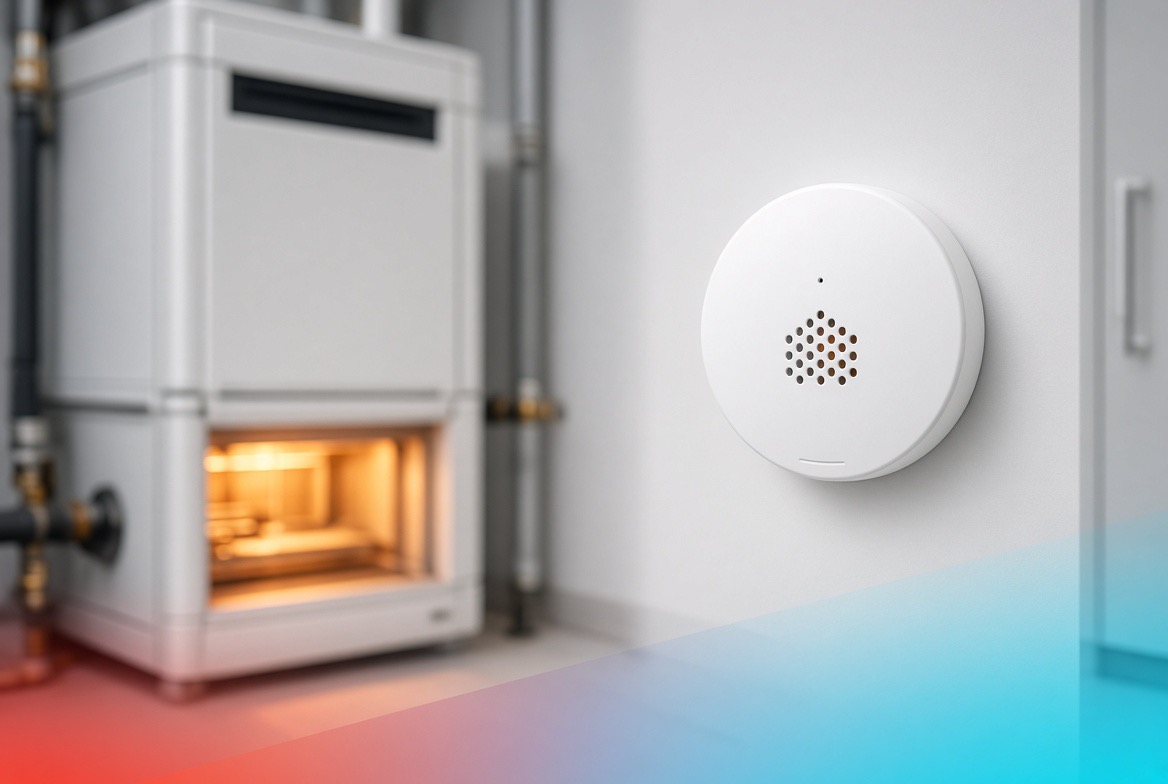
Arkansas winters can be cold enough that a gas furnace runs for long stretches. When that happens, one safety device becomes especially important: a carbon monoxide (CO) detector. Many people refer to these as “CO2 detectors,” but the two gases are different, and the distinction matters for your family’s safety.
Carbon monoxide vs. carbon dioxide
Carbon monoxide (CO) is produced when fuel (natural gas, propane, oil, or wood) burns incompletely. It is colorless, odorless, and tasteless—often called the “silent killer.” Even relatively low levels can cause headaches, dizziness, nausea, fatigue, or worse. At higher concentrations it can be life-threatening. A cracked heat exchanger, blocked vent, poor combustion air, or other furnace problem can allow CO to enter living spaces.
Carbon dioxide (CO2) is a normal byproduct of complete combustion and of people breathing. Elevated indoor CO2 usually signals that a space needs more fresh air. High CO2 can make a room feel stuffy and may affect comfort, sleep, or concentration, but it is not the same acute poison that CO is. A CO2 monitor is useful for indoor air quality and ventilation awareness; it will not detect carbon monoxide or protect you from a CO leak.
For homes with a gas furnace (or any fuel-burning appliance), the life-safety device you need is a certified carbon monoxide (CO) detector/alarm. A CO2 monitor can be a helpful extra for air quality, but it is not a substitute.
Why it matters with a gas furnace
Your furnace is designed to burn fuel safely and send the exhaust outdoors. Problems can still occur:
- A cracked or damaged heat exchanger
- Blocked, disconnected, or poorly drafted vents or flues
- Inadequate combustion air
- Dirty burners or other maintenance issues that cause incomplete combustion
Because CO has no smell or color, you may not notice a problem until symptoms appear. A properly placed, working CO alarm gives you an early warning so you can get everyone (including pets) outside and call for help.
Arkansas codes generally require carbon monoxide detection in homes that contain fuel-burning appliances, are served by a fuel-burning forced-air furnace, or have an attached garage. Placement is typically outside each separate sleeping area in the immediate vicinity of the bedrooms (and inside a bedroom if a fuel-burning appliance is located there or in an attached bathroom). Check current local requirements and follow the manufacturer’s instructions for your specific units.
Placement and maintenance tips
- Install CO alarms on every level of the home, including basements, and outside sleeping areas.
- Follow the manufacturer’s height and location guidance (many can go on walls or ceilings; avoid placing them right next to the furnace or in very humid areas).
- Test them monthly and replace batteries as recommended.
- Replace the alarms themselves on the schedule printed on the unit (many are 5–10 years). Sensing elements wear out even if the battery still works.
- Combination smoke/CO alarms are convenient, but make sure they meet the applicable standards for both.
If an alarm sounds:
- Get everyone outside immediately.
- Call 911 from outside.
- Do not re-enter or restart the furnace until professionals say it is safe.
- Once the home is cleared, have a qualified technician inspect the furnace and other fuel-burning appliances.
How regular maintenance helps
A seasonal furnace tune-up is one of the best ways to reduce the chance of combustion problems. A technician can check the heat exchanger, burners, venting, combustion air, and overall operation. Comfort Membership includes seasonal visits and priority scheduling—helpful when the first hard freeze arrives in the River Valley.
Even with good maintenance, CO detectors remain an important backup. They protect you between service visits and catch issues that can develop unexpectedly.
Bottom line
- CO detectors are the essential safety device for homes with gas furnaces or other fuel-burning equipment.
- CO2 monitors are useful for tracking ventilation and indoor air quality but do not detect carbon monoxide.
- Install, test, and maintain CO alarms, and keep your furnace serviced.
If you’d like us to check your furnace or answer questions about CO safety in your home, give us a call or schedule online.
Explore Comfort Membership · Schedule service · View heating services